

Transparent monthly plans. No setup fees. No surprises.
For single-provider practices.
For 2–5 provider practices.
For multi-location groups.
Great revenue cycle work starts with great clinical understanding. Here are three diagrams our team uses when training billers on dental coding.
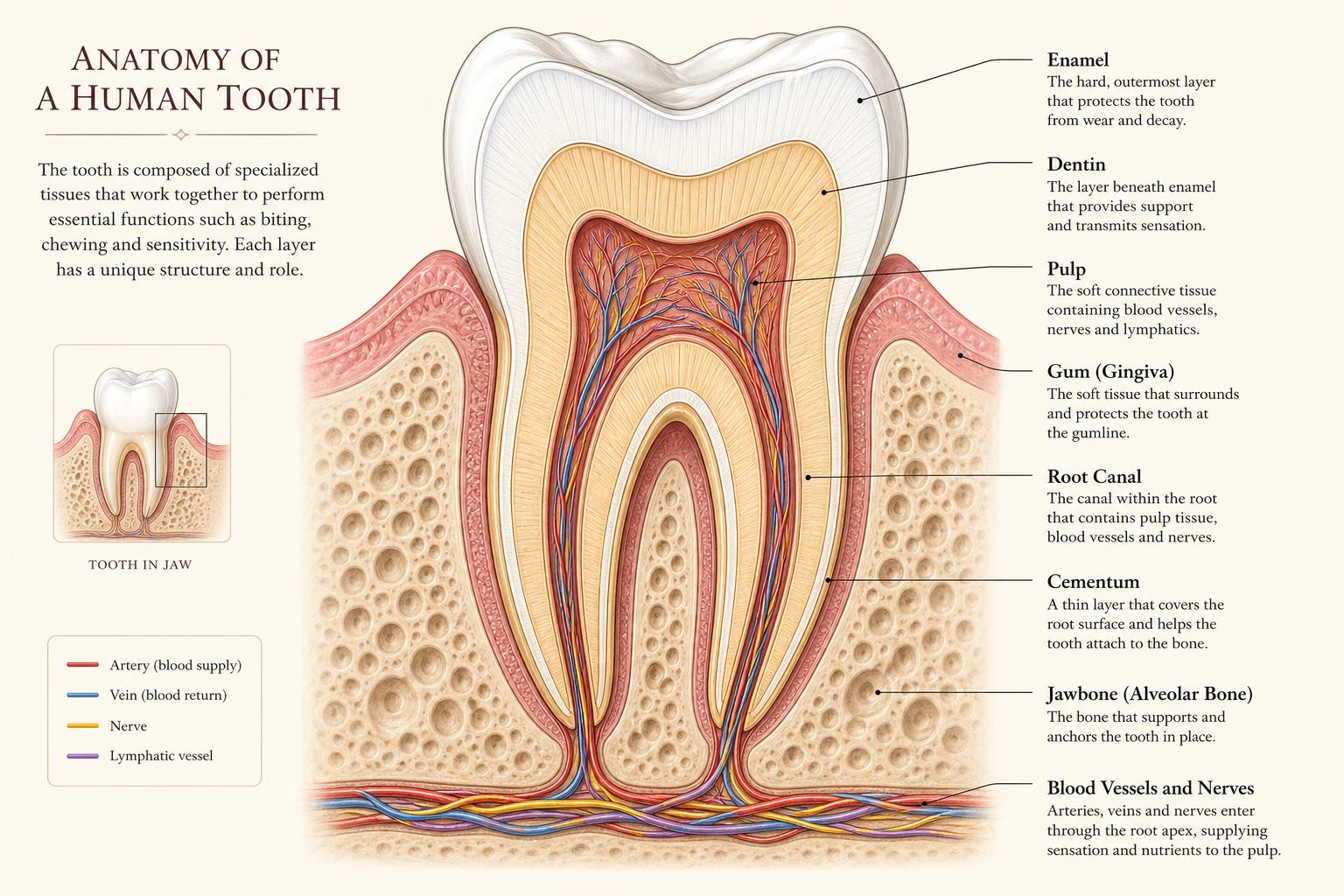
From enamel to root apex, every tooth is a layered biological structure. Understanding which tissues a procedure touches is the difference between a clean claim and a denial.
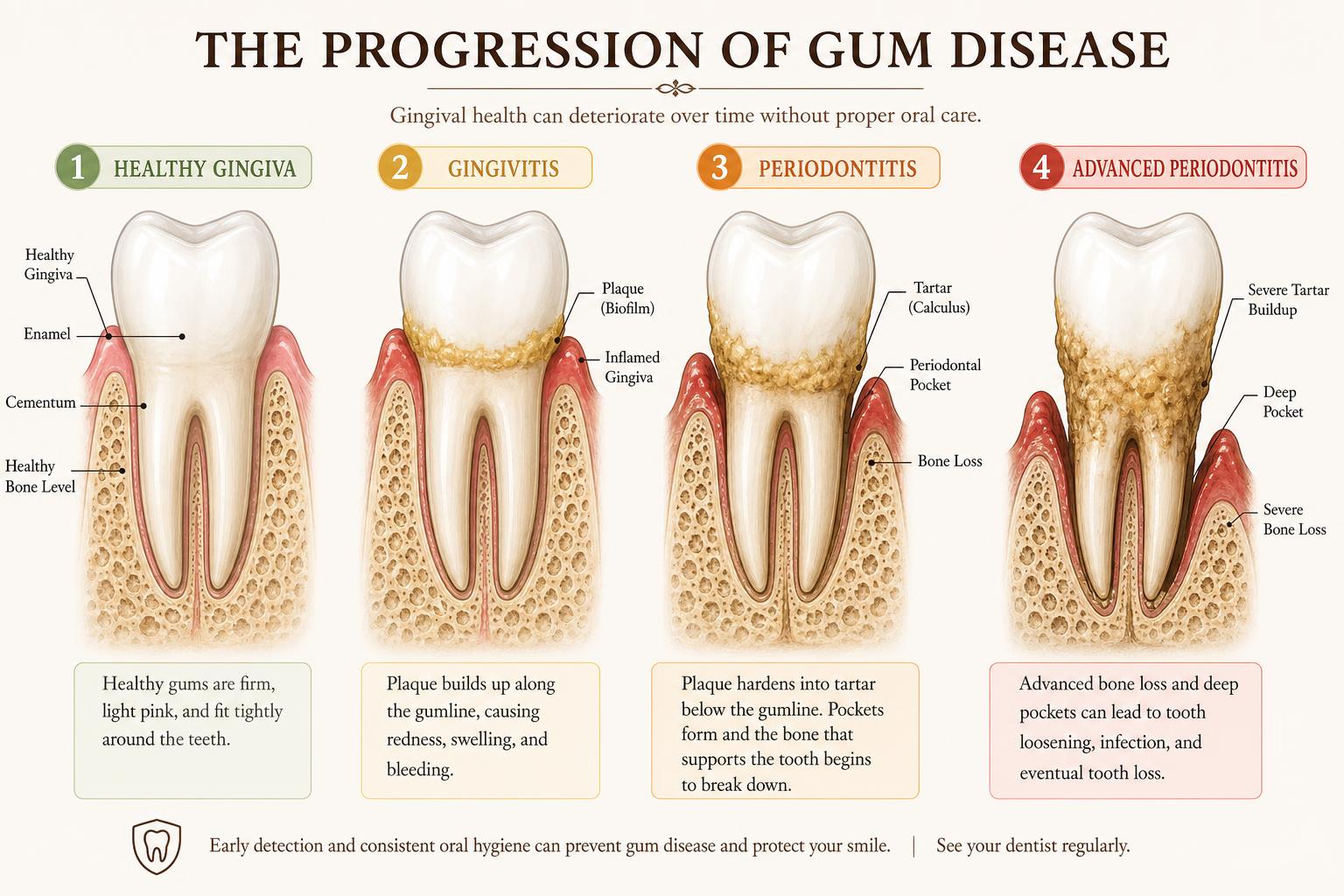
Healthy gingiva, gingivitis, periodontitis and advanced periodontitis each have specific clinical findings — and each maps to a different set of perio codes and frequency limits.

An implant is three components billed separately — surgical placement, abutment and crown — over a months-long osseointegration timeline. Sequencing matters for both clinical success and reimbursement.
Tell us about your practice. We'll show you exactly where Toothy recovers revenue.
Pricing is simple — the platform is the same for everyone. You only choose how much of your back-office we run.
Unlimited eligibility checks across 1,800+ payers, every plan, every visit.
AI-coded, scrubbed, submitted and tracked in your dashboard in real time.
Branded text + email pay links and saved-card flows on every account.
A/R aging, payer mix, denial reasons, recovery — refreshed hourly.
A senior RCM strategist walks the leadership team through the numbers.
Dedicated Slack channel + on-call team for billing emergencies.
Salary is only the headline. Add benefits, software, training, turnover and lost denials — Toothy almost always wins.
Most single-FTE billing teams quietly cost $90k+ once you include software, payroll taxes and the revenue lost during a 6-week vacancy. Toothy replaces that with a fixed % of recovered revenue.
Plain answers to the things every office manager asks before signing.
No. Implementation is included. We only get paid once you start collecting.
Month-to-month after the first 90 days. Cancel any time with 30 days notice.
A single monthly invoice, ACH debit, with a per-line breakdown of fees against collections.